
I Had No Idea What I Was Doing With My 3 Year Old… Until This

If you're reading this late at night, finally having a quiet moment to yourself after a long day with your little one, you're probably feeling what I felt not too long ago. That mix of excitement and absolute terror about teaching your child at home. The endless questions swirling in your mind: Am I doing enough? Am I doing it right? Will my child be ready for kindergarten?
I'm Susy, and six months ago, I was exactly where you might be now. My son had just turned 3, and I'd made the decision to teach him at home instead of sending him to preschool. It felt right in my heart, but my mind? My mind was spinning with doubt every single day.
The Sunday Night Panic Every Week
My son turned 3 in August, and I confidently announced to my family that I was going to teach him at home. My mother-in-law raised an eyebrow. My husband asked if I was sure. And honestly? I wasn't. But I knew I wanted to be the one to watch him discover letters, numbers, and the magic of learning. The problem was, I had absolutely no clue where to start.
Every Sunday night became my personal nightmare. While my son slept peacefully, I'd be hunched over my laptop scrolling through Pinterest for preschool activities. I'd save 47 pins about letter A crafts, find 23 different worksheets for number recognition, and bookmark 15 sensory play ideas. By midnight, I'd have a chaotic mess of ideas with zero plan on how they fit together. Does letter recognition come before phonics? Should I teach uppercase or lowercase first? What about fine motor skills?
When "Winging It" Stops Working
The first month was rough. I'd started like most moms do, turning to YouTube. I watched hundreds of videos about play-based learning, Montessori methods, and "learning through play." I bought individual activity packs from different sellers on Teachers Pay Teachers—a letter recognition bundle here, a counting pack there, some sensory bin ideas from another creator. I think I spent close to $200 in those first few weeks alone, collecting bits and pieces that never quite fit together.
I also jumped into a popular play-based preschool approach that I'd heard amazing things about. And don't get me wrong, I absolutely believe play is important. Watching my son build towers with blocks, create imaginary worlds, and explore through sensory activities—those moments are precious and developmentally crucial. He was happy, he was playing, and I convinced myself that was enough.
But here's the truth I had to face around week six: play alone wasn't developing the academic skills he needed for kindergarten. While he could spend an hour building with blocks, he still didn't recognize most letters. While he loved sensory bins, he couldn't hold a pencil correctly or trace basic shapes. The play was beautiful, but it wasn't systematic. It wasn't building the foundational literacy and math skills that I knew kindergarten teachers would expect him to have.
I realized I needed both. The natural, joyful exploration through play AND the structured, intentional teaching of academic skills. But how do you balance that when you're also managing a household, caring for a baby, supporting your husband, and barely finding time to shower? Time became my biggest enemy. I didn't have 15 hours a week to create this perfect blend from scratch. I needed something that had already figured out how to weave play and academics together in a way that actually worked.
That's when the Sunday night panic attacks really started.
The Breaking Point (And The Solution)
It was a Wednesday in September when everything changed. My son asked me, "Mommy, are we doing school today?" and I had nothing prepared. Again. I'd spent hours the night before looking for activities, but nothing felt right. Nothing connected. It was all just random stuff scattered across my computer in a dozen different folders.
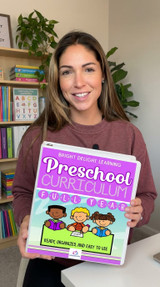
That's when I stumbled across something that promised to be different: a complete preschool curriculum organized month by month. I was skeptical, honestly. I'd bought digital resources before that looked amazing in the preview but turned out to be just pretty covers with mediocre content inside. But something about this one caught my attention—maybe it was desperation, maybe it was intuition.
When I first downloaded it, I'll admit I was overwhelmed. There were so many folders, so much material. I remember sitting there thinking, "Great, another thing I have to organize and figure out." But then I did something that changed everything: I just started with the simplest activities first.
I didn't try to do it all. I didn't try to be perfect. I opened the first week of the first month and selected the most straightforward worksheets—basic tracing, simple letter recognition, one uncomplicated craft that required scissors, glue, and paper we already had. That's it. Nothing fancy. Nothing that required me to run to the craft store or spend an hour prepping materials.
What I discovered as I went through those folders was pure gold: everything was already organized by week and by skill progression. The creators had done the heavy lifting of figuring out what builds on what. Monday's activity naturally led into Tuesday's. The letter recognition worksheet connected to the craft, which reinforced the phonics activity. It wasn't random. It was intentional. And even though there were 2,400+ pages of materials in there, I didn't have to use everything—I could pick and choose based on my son's needs and our daily energy levels.
What Changed Everything For Us
Here's what nobody tells you about homeschooling preschool when you're also managing a household, a baby, and trying to be a supportive wife: time is your most precious resource, and it's the one thing you never have enough of. Every minute matters. Every decision about how to spend your limited energy matters.
This curriculum understood that reality. It wasn't designed for moms with unlimited time and a dedicated classroom space. It was designed for real moms, sitting at kitchen tables, with babies crying in the background and laundry piling up in the next room. Moms who need something to work on a Tuesday morning when the toddler barely slept the night before, and also on a Friday when everyone is actually having a good day.
The first thing that drew me in was the structure. This wasn't just a collection of cute worksheets. It was a complete roadmap with month-by-month lesson plans laid out clearly. Monday through Friday, I could see exactly what to teach, when to teach it, and why it mattered for kindergarten readiness. No more Sunday night panic attacks trying to cobble together a week's worth of activities from seven different Pinterest boards.
But here's what sold me: it was designed in black and white. After spending over $80 in colored ink the previous month printing "cute" materials from Pinterest, this was a game-changer. Bold lines that were easy for little hands to see, but no expensive color cartridges draining my wallet every week. The savings alone paid for the entire curriculum in the first month.
Our First Week With Real Structure
I'll never forget that first Monday with our new homeschool preschool lesson plans. I actually felt prepared. I'd printed the week's materials on Sunday evening in about 20 minutes. Everything was there: the worksheets, the craft instructions with simple household materials, even a social-emotional story about trying new things that perfectly matched where my son was developmentally.
We started with circle time learning about the letter A. The activities built on each other naturally: first, we traced the letter, then we did a simple apple craft, then we went on a hunt around the house for things that started with A. By Friday, he was pointing at the word "apple" in his storybook unprompted. I actually cried.
Why This Actually Works (For Regular Moms Like Me)
I'm not a certified teacher. I don't have a degree in early childhood education. I'm just a mom who wanted to give her kid a strong foundation without burning out in the process. What makes this preschool curriculum for homeschool families so effective is that it's built for people like us: parents who care deeply but need structure and support.
The lesson plans are editable, which means I can adjust the pace if my son needs more time on a concept or wants to race ahead. The spiral review system means that skills come back multiple times throughout the year, so even if he doesn't master counting to 20 in October, he'll see it again in December and February. Nothing falls through the cracks.
And the whole child approach? That's what sets it apart from just buying random worksheet packs. Every week includes fine motor development, gross motor activities, art, science exploration, and social-emotional learning. It's not just about making sure he knows his ABCs. It's about raising a confident, curious, emotionally intelligent kid who loves learning.
The Real Results (Not Just My Mom Bias)
Three months into using this complete preschool bundle, my son can identify all 26 letters, recognize numbers 1-20, cut along lines with scissors, and is starting to blend simple CVC words. But honestly? The academic stuff isn't even the best part.
The best part is that our mornings are calm now. I wake up knowing exactly what we're doing. He's excited because the activities are engaging and build on each other. I'm not stressed because I have a plan. My husband comes home and asks, "What did you learn today?" and my son can actually tell him, with pride.
My mother-in-law stopped questioning my decision. Last month, she watched us during our school time and said, "I'm impressed. He's really learning." Coming from her, that's basically a standing ovation.
If You're Where I Was Six Months Ago
If you're a first-time preschool mom feeling overwhelmed, second-guessing every decision, and wondering if you're doing enough, let me tell you what I wish someone had told me: you don't have to figure this out alone. You don't have to spend 10 hours a week planning lessons. You don't have to choose between quality education and your sanity.
A structured preschool curriculum gives you the framework you need while still letting you be the mom, not just the teacher. It takes the weight of "am I teaching the right things in the right order" off your shoulders so you can focus on what matters: connecting with your child and watching them grow.
The peace of mind of knowing that every week, we're covering exactly what he needs for kindergarten readiness? Worth every penny. The hours I get back every week because I'm not researching activities? Priceless. The confidence my son is building as he masters new skills week after week? That's the real win.
Your Turn
Teaching your 3 or 4 year old at home doesn't have to be chaotic. It doesn't have to drain your bank account or your energy. With the right preschool lesson plans and a complete curriculum that actually supports you, it can be one of the most rewarding things you'll ever do.
Take it from someone who almost quit in month one: having everything planned month by month in one organized system gave me confidence and turned our stressful mornings into calm, productive days. If you're a first-time preschool mom like I was, this might just be the solution you've been searching for too.
- Susy
Ready to transform your homeschool preschool experience? Discover the Complete Preschool Curriculum that's helping thousands of moms teach with confidence. Over 2,400 pages of structured lesson plans, worksheets, and activities designed to prepare your child for kindergarten while saving you time and money. Get started today and finally enjoy stress-free school mornings.
EXPLORE POPULAR ARTICLES
I Had No Idea What I Was Doing With My 3 Year Old… Until This
If you're reading this late at night, finally having a quiet moment to yourself after a long day wit...

Complete Kindergarten Curriculum Guide: Meeting Common Core Standards with Confidence
Introduction (Hook Emocional Poderoso) This is it. The big leap. Your five-year-old is starting kind...

Kindergarten Readiness Assessment: Is Your Child Ready? Complete Evaluation Guide
Introduction It's a question that keeps parents awake at night: "Is my c...