
Kindergarten Writing & Handwriting: Teaching Letter Formation, Sentences & Self-Expression (Ages 5-6)
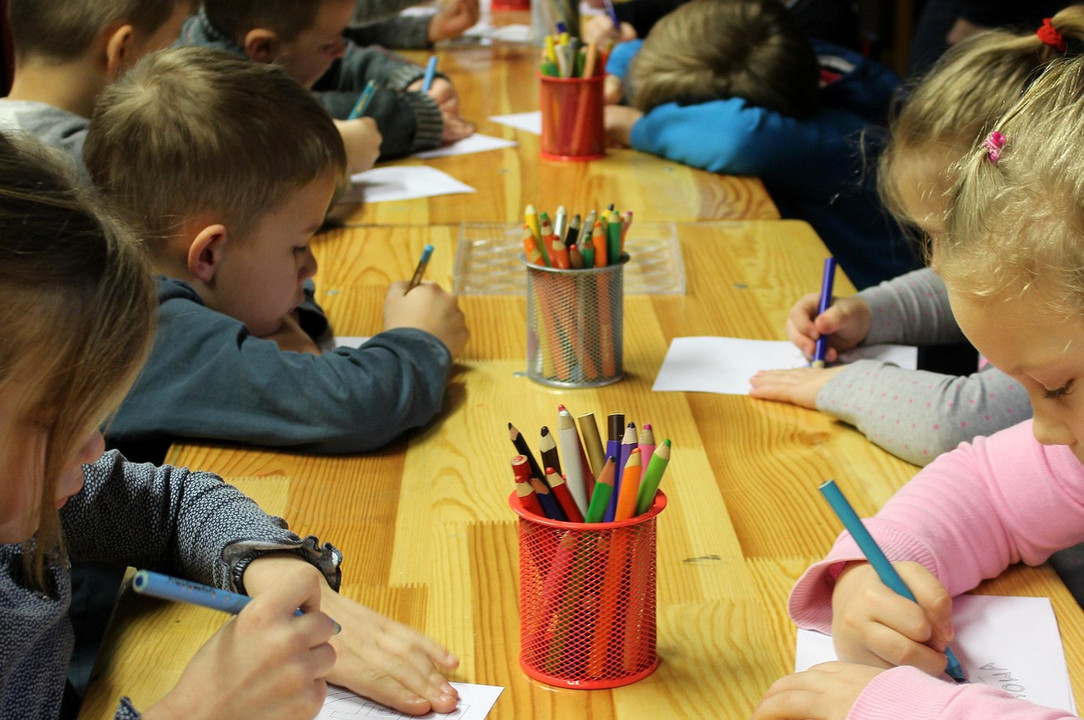
Complete guide to kindergarten writing and handwriting instruction aligned with Common Core Standards. From letter formation to sentence writing, build confident young writers with systematic, engaging methods.
Introduction
Your five-year-old is picking up a pencil and starting to write. Some days you see recognizable letters. Other days it's still scribbles and backwards "S"s. They want to write stories, but the words come out as random letter strings: "I LV MI DOG" (I love my dog). Their handwriting is large, wobbly, inconsistent—sometimes legible, sometimes not.
Common Core Standards expect kindergarteners to write sentences using a combination of drawing, dictating, and writing. They should form upper and lowercase letters, use capital letters at the beginning of sentences, add periods at the end, and spell simple words phonetically.
If you're a homeschool mom wondering how to teach proper letter formation, a kindergarten teacher juggling 22 students at different writing levels, or a parent trying to support your child's emerging writing skills—you need a clear roadmap.
Here's the truth: Writing is one of the most complex skills kindergarteners learn. It requires fine motor control, letter-sound knowledge, spelling awareness, grammar understanding, and the ability to organize thoughts. That's a LOT for a five-year-old brain and hands to coordinate!
But with systematic instruction, daily practice, and patience, kindergarteners absolutely can become writers. Not perfect writers—they're still learning. But confident writers who can express their ideas on paper.
This comprehensive guide walks you through everything you need to teach kindergarten writing and handwriting successfully—whether you're teaching in a classroom, homeschooling, or supporting learning at home.
What you'll discover:
Common Core Writing Standards Explained:
- Text types (opinion, informative, narrative)
- Production and distribution of writing
- Research and presentation skills
- Language conventions (capitalization, punctuation, spelling)
Handwriting Instruction:
- Fine motor development prerequisites
- Letter formation sequence (which letters to teach when)
- Proper pencil grip development
- Correct letter formation (starting points, strokes, sizing)
- Upper and lowercase mastery
- Common handwriting mistakes and fixes
The Writing Process for Kindergarten:
- Drawing as prewriting
- Dictation (teacher scribing student ideas)
- Independent writing with inventive spelling
- Revising and editing at kindergarten level
- Publishing and celebrating work
Types of Writing:
- Opinion writing (I like... because...)
- Informative/explanatory writing (All about...)
- Narrative writing (personal stories)
- Labels and captions
- Lists and simple sentences
Spelling Development:
- Stages of spelling (pre-phonetic to phonetic)
- Inventive spelling (why it's beneficial!)
- High-frequency word spelling
- Sound-letter correspondence
Daily Writing Instruction:
- Writing workshop structure
- Mini-lessons that work
- Independent writing time management
- Conferencing with young writers
- Sharing and celebrating
Assessment and Differentiation:
- Writing benchmarks for kindergarten
- Progress monitoring
- Supporting struggling writers
- Challenging advanced writers
Let's help your kindergartener become a confident, capable writer who loves expressing ideas on paper!
Understanding Kindergarten Writing Standards
Before diving into HOW to teach writing, let's clarify exactly what Common Core requires. Many parents and even some teachers are surprised by how much writing kindergarteners are expected to do.
Common Core Writing Standards for Kindergarten
Text Types and Purposes
The big shift in recent years: Kindergarteners aren't just "playing with writing"—they're producing actual texts with specific purposes.
W.K.1: Opinion Writing
Use a combination of drawing, dictating, and writing to compose opinion pieces in which they tell a reader the topic or the name of the book they are writing about and state an opinion or preference about the topic or book.
What this looks like:
- Drawing: Child draws their favorite animal
- Dictating: "I like dogs best because they are fun to play with."
- Writing: "I LIK DOGZ" or "I like dogs" (depending on developmental level)
Notice the phrase "combination of drawing, dictating, and writing." Not all writing! Kindergarteners can express ideas through multiple modes.
W.K.2: Informative/Explanatory Writing
Use a combination of drawing, dictating, and writing to compose informative/explanatory texts in which they name what they are writing about and supply some information about the topic.
What this looks like:
- Topic: Butterflies
- Drawing: Picture of butterfly with labeled parts
- Writing: "BTRFLIS HAV WINGS" (Butterflies have wings)
- Dictating additional info: "They drink nectar from flowers. They start as caterpillars."
All About Books are perfect for this standard! "All About Dogs," "All About My Family," "All About Snow."
W.K.3: Narrative Writing
Use a combination of drawing, dictating, and writing to narrate a single event or several loosely linked events, tell about the events in the order in which they occurred, and provide a reaction to what happened.
What this looks like: Personal narrative: "I went to the park. I played on the swings. It was fun!"
- First (drawing + writing)
- Then (drawing + writing)
- Last (drawing + writing)
The key: SEQUENCE. Events in order. And a reaction or feeling about what happened.
Production and Distribution of Writing
W.K.5: Responding to Questions and Suggestions
With guidance and support from adults, respond to questions and suggestions from peers and add details to strengthen writing as needed.
What this means: Teachers and peers ask questions to help students elaborate.
Teacher: "You wrote that you went to the park. What did you do there?" Student adds: "I played on the swings."
This is conferencing! Not formal editing—just conversation that helps students add details.
W.K.6: Digital Tools
With guidance and support from adults, explore a variety of digital tools to produce and publish writing, including in collaboration with peers.
What this looks like:
- Typing stories on computer
- Using drawing apps to illustrate
- Creating digital books
- Collaborative class projects
Not required to be tech experts! Just exposure and exploration.
Research to Build Knowledge
W.K.7: Shared Research Projects
Participate in shared research and writing projects (for example, explore a number of books by a favorite author and express opinions about them).
What this looks like: Class project: "Our Favorite Eric Carle Books" Each student writes about their favorite, creates page for class book.
W.K.8: Recall and Gather Information
With guidance and support from adults, recall information from experiences or gather information from provided sources to answer a question.
What this looks like: Question: "What do you know about pumpkins?" Student draws on personal experience (visited pumpkin patch) and information from read-alouds to write facts about pumpkins.
Language Standards (The Mechanics)
L.K.1: Grammar
While writing or speaking, demonstrate command of conventions of standard English grammar:
- Print many upper and lowercase letters
- Use frequently occurring nouns and verbs
- Form regular plural nouns orally by adding /s/ or /es/
- Understand and use question words (who, what, where, when, why, how)
- Use frequently occurring prepositions (to, from, in, out, on, off, for, of, by, with)
- Produce and expand complete sentences
L.K.2: Capitalization, Punctuation, Spelling
Demonstrate command of conventions when writing:
- Capitalize the first word in a sentence and the pronoun "I"
- Recognize and name end punctuation
- Write a letter or letters for most consonant and short-vowel sounds
- Spell simple words phonetically, drawing on knowledge of sound-letter relationships
This is the heart of kindergarten writing conventions:
- CAPITAL at beginning
- period at end (or ! or ?)
- Phonetic spelling (inventive spelling is GOOD!)
Notice what's NOT required: Perfect spelling. Correct grammar throughout. Complex punctuation. Those come later!
The Kindergarten Writing Progression: What to Expect Month by Month
Writing develops gradually across the kindergarten year. Here's a realistic timeline based on typical development and our Complete Kindergarten Curriculum monthly progression.
August/September: Foundations - Drawing and Emergent Writing
Focus: Fine motor development, letter introduction, understanding that writing carries meaning
What students do:
- Draw pictures with increasing detail
- Add labels to pictures (random letters or letter-like shapes)
- Write their name (may be just first few letters)
- Dictate longer ideas to teacher
- "Read" their writing (may not match what's actually written!)
Writing samples you'll see:
- Detailed drawings with scribbles underneath
- Random letter strings: "BSKTMR"
- Their name: "EMMA" or "EMA" or "EM"
Teacher focus:
- Daily drawing time
- Name writing practice
- Letter formation introduction (focus on uppercase first)
- Modeling writing during shared/interactive writing
Our curriculum provides: Name writing templates, drawing prompts, letter formation guides, and fine motor activities for August-September.
October/November: Letter Formation and Labels
Focus: Systematic letter formation instruction, labeling pictures, beginning sounds
What students do:
- Write recognizable letters (some may still be reversed)
- Label pictures with beginning sounds: "D" for dog
- Copy simple words from word wall
- Write simple pattern sentences: "I see a ___."
- Dictate more complex ideas
Writing samples:
- Pictures with labels: "DOG" "KT" (cat) "SN" (sun)
- Pattern sentences: "I see a dog." (copied from model)
- Attempted words: "MI MOM" (my mom)
Teacher focus:
- Letter formation lessons (introduce 2-3 letters per week)
- Beginning sound work
- Sight word introduction
- Interactive writing (class composes together, teacher scribes)
Our curriculum provides: Letter formation worksheets, labeling activities, pattern sentence frames, and October/November writing prompts.
December/January: Simple Sentences Emerging
Focus: Writing simple sentences independently, inventive spelling, capitalization and punctuation
What students do:
- Write simple sentences with inventive spelling
- Use some sight words correctly
- Remember capitals at beginning (usually!)
- Add periods at end (sometimes!)
- Compose 2-3 related sentences
Writing samples:
- "I LIK SNO." (I like snow.)
- "I SAW A DOG. IT WAS BIG." (two sentences!)
- "MI FAVRT CLR IS BLU." (My favorite color is blue.)
Teacher focus:
- Daily sentence writing practice
- Capitals and periods explicitly taught
- Inventive spelling encouraged ("spell it how it sounds!")
- Word spacing (finger spaces between words)
Our curriculum provides: Sentence writing frames, punctuation practice, inventive spelling guides, and mid-year writing prompts.
February/March: Multiple Sentences and Details
Focus: Writing multiple sentences on one topic, adding details, expanding vocabulary
What students do:
- Write 3-4 sentences on one topic
- Add descriptive words (big, little, red, fast)
- Sequence with "First, Next, Then, Last"
- Revise by adding details when prompted
- Use more conventional spelling for high-frequency words
Writing samples: Opinion: "I like pizza. It is yummy. It has cheese. Pizza is my favorite." Narrative: "First I woke up. Next I ate breakfast. Then I went to school. Last I played."
Teacher focus:
- Elaboration strategies (adding "why" or describing words)
- Transition words for sequencing
- Topic sentences
- Revising and adding to writing
Our curriculum provides: Graphic organizers, transition word posters, revision checklists, and February-March writing projects.
April/May: Independent Writers
Focus: Independence, writing for different purposes, conventions becoming more automatic
What students do:
- Choose own topics and write independently
- Write across genres (stories, facts, opinions)
- Use capitals and periods more consistently
- Spell many high-frequency words correctly
- Self-edit with simple checklist
Writing samples:
- Full page narratives with beginning, middle, end
- Opinion pieces with reason: "I think dogs are the best pets because they are loyal and fun."
- Informational pieces: "Frogs live in water and on land. They eat bugs. Tadpoles turn into frogs."
Teacher focus:
- Writing stamina (longer independent writing time)
- Author's chair (students share writing)
- Publishing final pieces
- End-of-year writing assessment
Our curriculum provides: End-of-year prompts, publishing templates, assessment rubrics, and celebration ideas.
Teaching Handwriting: Letter Formation that Sticks
Handwriting is a SKILL that must be taught explicitly. Children don't intuitively know how to form letters correctly. Poor habits formed in kindergarten are hard to break later!
Why Correct Letter Formation Matters
Beyond just "neatness," correct letter formation:
- Increases writing speed and fluency
- Reduces hand fatigue
- Makes letters more legible
- Builds automaticity (frees mental space for composing)
- Prevents reversals and confusion
Kindergarten is THE time to establish good habits!
The Letter Formation Sequence: Which Letters to Teach When
Don't teach alphabetically! Group letters by similar formation patterns.
Most programs teach in this sequence:
Phase 1: Uppercase Letters with Straight Lines (Easiest) L, T, I, H, E, F
Why start here: Simple strokes (straight lines), no curves or diagonals
Letter formation:
- L: "Pull down, slide right"
- T: "Pull down, cross the top"
- I: "Pull down, dot the top"
- H: "Pull down, pull down, across the middle"
- E: "Pull down, slide right, slide right, slide right"
- F: "Pull down, slide right, slide right"
Phase 2: Uppercase Letters with Curves C, O, Q, G, S, U, J
Circle letters and curves
Letter formation:
- C: "Start at the top, curve around (make a smile)"
- O: "Start at the top, curve all the way around, close it"
- Q: "Make an O, add a tail"
- G: "Make a C, add a line across"
- S: "Curve, curve (like a snake)"
- U: "Pull down, curve, pull up"
- J: "Pull down, curve left, dot the top"
Phase 3: Uppercase Letters with Diagonals A, V, W, X, Y, Z, K, M, N
Harder! Diagonals require more control.
Letter formation:
- A: "Slant down, slant down, across the middle"
- V: "Slant down, slant up"
- W: "Slant down, slant up, slant down, slant up"
- X: "Slant down right, lift, slant down left"
- Y: "Slant down, slant down, pull down"
- Z: "Slide right, slant down, slide right"
- K: "Pull down, slant in, slant out"
- M: "Pull down, slant down, slant up, pull down"
- N: "Pull down, slant down, pull up"
Phase 4: Letters with Circles and Sticks P, R, B, D
Commonly confused! Teach VERY explicitly.
Letter formation:
- P: "Pull down, curve at the top"
- R: "Pull down, curve at the top, slant out"
- B: "Pull down, bump, bump (two bumps on the right)"
- D: "Pull down, curve from top to bottom (one big bump)"
Teaching tip: Use verbal cues consistently! "Pull down, bump, bump" for B becomes automatic.
Phase 5: Lowercase Letters
Many programs delay lowercase until mid-kindergarten or even first grade. Others teach both simultaneously.
If teaching lowercase in kindergarten, same grouping strategy:
Tall letters: b, d, f, h, k, l, t Short letters: a, c, e, i, m, n, o, r, s, u, v, w, x, z Letters with tails: g, j, p, q, y
Our Complete Kindergarten Curriculum includes:
- Week-by-week letter introduction schedule
- Letter formation worksheets for each letter
- Handwriting practice pages
- Letter formation posters for classroom display
- Multisensory letter activities
Available as complete year-long bundle at https://ebookstorify.com/complete-kindergarten-curriculum-2900-pages-kinder-bundle/ or individual monthly units at https://ebookstorify.com/kindergarten-monthly-curriculum/
Multisensory Letter Formation Activities
Don't just use worksheets! Kindergarteners need varied, engaging practice.
Sky Writing Use whole arm to "write" large letters in the air. Say formation cues aloud while doing it. "Pull down, bump, bump—B!"
Playdough Letters Roll playdough into "snakes," form letters. Kinesthetic and tactile!
Sand/Salt Trays Fill shallow tray with sand, salt, or rice. Child traces letters with finger while saying formation cues.
Shaving Cream Writing Spray shaving cream on table or cookie sheet. Write letters in the cream. Sensory and fun!
Wikki Stix or Pipe Cleaners Manipulate flexible materials to form letter shapes.
Rainbow Writing Write letter in pencil. Trace over it 5+ times with different colored crayons/markers.
Whiteboard Practice Dry-erase markers are easier than pencils (less pressure needed). Great for practice!
Finger Tracing Trace sandpaper letters, textured letters, or laminated letter cards.
Chalkboard Writing Different surface, different sensation. Some children love the resistance of chalk.
Water Painting Use paintbrush and water to "write" letters on chalkboard or sidewalk. Mess-free!
Letter Hunt Find target letter in magazines, books, environmental print. Trace it with finger.
Body Letters Use bodies to form letter shapes (lie on floor, stand and pose). Especially good for letters like T, L, X.
Daily handwriting practice: 10-15 minutes is plenty! Short, multisensory sessions beat long worksheet marathons.
Developing Proper Pencil Grip
Pencil grip develops gradually. Most kindergarteners are transitioning from immature grips to mature tripod grip.
The Developmental Progression
Ages 1-2: Fisted grip (whole hand around crayon) Ages 2-3: Digital pronate grip (fingers around crayon, wrist moves it) Ages 3-4: Modified tripod grip (thumb and fingers, but not quite right) Ages 4-6: Dynamic tripod grip (mature, efficient grip)
Dynamic Tripod Grip (The Goal)
- Thumb on one side
- Index finger on top
- Middle finger supporting from below
- Ring and pinky fingers tucked into palm
- Pencil rests in the "web space" between thumb and index finger
How to Encourage Proper Grip
1. Build Hand Strength First Weak hands can't maintain proper grip!
Daily activities:
- Playdough squeezing and rolling
- Clothespin activities
- Spray bottles
- Squeezing sponges
- Climbing and hanging
- Finger games
2. Use Short Writing Tools Break crayons in half. Use golf pencils. Short tools can't be gripped with whole fist—naturally encourage tripod placement.
3. Triangular Crayons/Pencils Three flat sides position fingers naturally.
4. Pencil Grips Rubber or foam grips that slide onto pencils. Guide fingers into correct position.
Types:
- Triangle grips
- Claw grips
- Bumpy grips
Try several—different children prefer different styles!
5. "Pinch and Flip" Technique
Teach this method:
- Pinch the pencil tip with thumb and index finger
- Flip the pencil back into writing position
- Fingers land in tripod grip naturally!
6. Vertical Surfaces Tape paper to wall or use easel. Vertical writing naturally promotes proper wrist position and grip.
7. Don't Over-Correct Constant nagging creates resistance. Model proper grip, provide tools that encourage it, gently remind—but don't make it a battle.
If grip isn't improving by age 6-7, consider occupational therapy evaluation.
Teaching the Writing Process for Kindergarten
Even five-year-olds can learn that writing is a process, not just a single draft!
Step 1: Prewriting (Thinking and Planning)
For kindergarteners, prewriting is usually:
- Drawing
- Talking about ideas
- Brainstorming with class
- Looking at mentor texts (examples)
Strategies:
Drawing First "Draw your idea first. Then we'll write about it."
Drawing helps organize thoughts and provides concrete reference while writing.
Turn and Talk "Turn to your partner and tell them your idea."
Rehearsing orally before writing helps!
Graphic Organizers (Simple!)
- Beginning, Middle, End boxes for narratives
- Web for All About topics
- "I like ___ because ___" frame for opinion
Think Aloud Teacher models: "Hmm, what should I write about? I could write about my dog... or about the park... I think I'll write about the park because something funny happened there!"
Step 2: Drafting (Getting Ideas Down)
In kindergarten, drafting means:
- Drawing pictures
- Writing words/sentences with inventive spelling
- Dictating longer ideas to teacher
Key principles:
Inventive Spelling is GOOD! Encourage students to "spell it how it sounds" rather than asking teacher to spell every word.
"I want to write 'butterfly.'" Teacher: "What sounds do you hear? Say it slowly." Student: "B... t... r... f... l... i" Writes: "BTRFLI" Teacher: "Perfect! You spelled it how it sounds. I can read that!"
Why inventive spelling matters:
- Builds phonemic awareness
- Encourages independence
- Allows focus on ideas rather than correctness
- Shows developmental spelling growth
Word Walls and High-Frequency Words Some words should be spelled correctly (the, and, I, can, see). Post these on word wall for reference.
"If the word is on our word wall, spell it correctly. If it's not, spell it how you hear it!"
Focus on Stamina Start with 5 minutes of independent writing. Gradually build to 15-20 minutes by end of year.
Step 3: Revising (Adding and Improving)
Kindergarten revision is SIMPLE:
- Adding details
- Adding color words or describing words
- Adding more sentences
Not: Grammar corrections, spelling fixes, complete rewrites
Revision strategies:
Teacher Conferencing Sit with student, read their writing. Ask: "Tell me more about this. What else happened?" Student adds: "The dog was brown. He was big."
Peer Sharing Partner reads writing. Listener asks one question. "What color was the ball?" Writer adds color word.
Revision Checklist (Picture-Based)
- Did I add details to my picture?
- Did I write at least 3 sentences?
- Did I add describing words?
Step 4: Editing (Fixing Mistakes)
For kindergarten, editing focuses on just a few conventions:
- Capital at beginning
- Period at end (or ! or ?)
- Finger spaces between words
That's it! Not spelling corrections (inventive spelling is developmentally appropriate). Not complex grammar.
CUPS Strategy (Simplified)
Original CUPS: C = Capitalization U = Usage P = Punctuation S = Spelling
Kindergarten CUPS: C = Capital at the start? P = Period at the end? S = Spaces between words?
Editing Checklist with Pictures
- Picture of capital letter: "Did I use a capital at the beginning?"
- Picture of period: "Did I put a period at the end?"
- Picture of hand with finger spaces: "Did I use spaces?"
Students check their own work with teacher support.
Step 5: Publishing (Final Copy and Celebrating)
Not every piece gets published! Choose favorite pieces (1-2 per month) to "publish."
Publishing options:
- Rewrite on special paper with illustration
- Type on computer and print
- Create class book
- Display on bulletin board
- Add to student portfolio
- Share in Author's Chair
Author's Chair Special chair or designated spot. Student sits in chair and reads published piece to class. Classmates give compliments: "I liked your describing words!" "Your story was funny!"
This celebrates writing and builds community!
Types of Writing in Kindergarten
Common Core requires three types: opinion, informative, and narrative. Here's how to teach each.
Opinion Writing
Structure: "I like/think ___ because ___."
Progression:
Early Kindergarten:
- Drawing: favorite animal
- Oral: "I like dogs."
- Writing: "I LIK DOGZ."
Mid-Kindergarten:
- Drawing: favorite season
- Oral: "I like summer because I can swim."
- Writing: "I LIK SMR. I KN SWM." (I like summer. I can swim.)
Late Kindergarten:
- Topic: Best pet
- Writing: "I think dogs are the best pets. They are fun. They play with you. Dogs are good pets."
Teaching strategies:
Sentence Frames "My favorite ___ is ___ because ___." "I think ___ is the best because ___." "I like ___ because ___."
Model with Think-Alouds "I'm going to write about my favorite food. Hmm, I like pizza. Why do I like pizza? Because it's cheesy and delicious! So I'll write: I like pizza because it is cheesy."
Class Opinion Charts Graph class opinions: "What's your favorite season?" Each student writes sentence: "I like winter because I like snow." Create class book!
Opinion Topics for Kindergarten:
- Favorite color, animal, food, season, book, game
- Best playground equipment, holiday, weather
- Would you rather (beach or mountains? dog or cat?)
Informative/Explanatory Writing
Structure: "All About ___" or "Facts About ___"
Progression:
Early Kindergarten:
- Topic: Apples
- Drawing: apple with labels (stem, seeds, skin)
- Writing: "APLS R RD." (Apples are red.)
Mid-Kindergarten:
- Topic: My Family
- Writing: "I have a mom and dad. I have a brother. We live in a house."
Late Kindergarten:
- Topic: Penguins
- Writing: "Penguins live in Antarctica. They eat fish. They cannot fly. Baby penguins are called chicks."
Teaching strategies:
All About Books Each page = one fact Page 1: "Frogs are amphibians." Page 2: "Frogs have webbed feet." Page 3: "Frogs eat bugs." Page 4: "Tadpoles turn into frogs."
Research from Read-Alouds Read non-fiction book about topic (butterflies, dinosaurs, ocean animals). Students recall facts and write them.
Expert Topics "You are the expert! Teach us about something you know well." Topics: my pet, my hobby, my favorite sport, my family traditions
Informative Topics:
- Animals (facts about dogs, cats, elephants, sharks)
- Seasons and weather
- Life cycles (butterfly, frog, plant)
- How-to (how to make a sandwich, how to play a game)
- My family, my school, my community
Narrative Writing
Structure: Beginning, Middle, End (or First, Next, Then, Last)
Progression:
Early Kindergarten:
- Topic: What I did this weekend
- First: "I WOKE UP."
- Next: "I ATE."
- Last: "I PLAD." (played)
Mid-Kindergarten:
- Topic: Going to the park
- Writing: "I went to the park. I played on the swings. I had fun."
Late Kindergarten:
- Topic: My birthday party
- Writing: "First we played games. Next we ate pizza. Then we had cake. Last I opened presents. It was the best day!"
Teaching strategies:
Personal Narrative Topics
- Small moments from students' lives (not big events necessarily!)
- What happened at recess
- Something funny that happened
- A time I helped someone
- My favorite day
Sequence Words Teach explicitly: First, Next, Then, Last (or Finally)
Use picture cues: 1st, 2nd, 3rd, 4th
Story Mountain Beginning (introduce), Middle (what happened), End (how it ended/how you felt)
Shared Storytelling Teacher tells personal story, class helps sequence: "What happened first? Then what? How did it end?"
Then students tell their own stories!
Narrative Frames: "One day I ___. First ___. Next ___. Then ___. It was ___!"
Daily Writing Workshop Structure
How do you fit in all this writing instruction? Writing workshop provides structure!
The 45-Minute Kindergarten Writing Block
0-10 minutes: Mini-Lesson
Teacher teaches ONE specific skill:
- How to add a capital letter
- How to use finger spaces
- How to stretch out words to spell them
- How to add details to your picture
Format:
- 2 min: Connect to previous learning
- 5 min: Teach new strategy (I do, We do)
- 3 min: Remind students of today's writing focus
10-30 minutes: Independent Writing Time (20 minutes)
Students write independently at tables/desks while teacher conferences.
What students do:
- Choose own topics (or write on assigned topic)
- Draw and write
- Use resources (word wall, alphabet chart, name cards)
- Work at own pace
What teacher does:
- Circulate and observe
- Conference with individual students (2-3 per day, 3-5 min each)
- Ask questions to extend thinking
- Provide targeted feedback
- Take anecdotal notes
Conference prompts:
- "Read me what you wrote."
- "Tell me more about this part."
- "What will you write next?"
- "What sound do you hear at the beginning of that word?"
30-40 minutes: Sharing Time (10 minutes)
Author's Chair (3-4 students share per day)
Student sits in special chair, reads writing to class.
Classmates respond:
- "I liked when you said..."
- "I have a question: ..."
- "This reminds me of..."
OR Partner Sharing Students pair up, read to each other, give compliments.
40-45 minutes: Reflection and Cleanup
- "What did you work on today?"
- "What will you work on tomorrow?"
- Put writing folders away
- Celebrate effort!
This structure gives:
- Direct instruction (mini-lesson)
- Practice time (independent writing)
- Feedback (conferencing)
- Celebration (sharing)
- Reflection
Supporting Struggling Writers
What if your kindergartener resists writing or struggles significantly?
Common Writing Challenges
1. Weak Fine Motor Skills Can't grip pencil properly, letters are illegible, writing causes frustration.
Solutions:
- Strengthen hands first (playdough, scissors, squeezing activities)
- Use thick crayons or markers (easier to grip)
- Try different writing tools (chalk, paintbrush, finger in sand)
- Reduce writing demands initially (write 1 sentence instead of 3)
- Provide hand-over-hand support
- Consider OT evaluation if issues persist
2. Doesn't Know Letters/Sounds Can't write because doesn't know what letters to use.
Solutions:
- Intensive phonics instruction
- Alphabet chart at desk for reference
- Focus on name writing first
- Use dictation more (child tells, teacher writes)
- Personal word bank with high-frequency words and pictures
3. Refuses to Write / Extreme Resistance "I can't!" "I don't know what to write!" Cries, shuts down.
Solutions:
- Make it playful (write silly sentences, write in shaving cream)
- Reduce length (one sentence is fine!)
- Let them draw extensively first
- Scribe for them initially, gradually release
- Choice in topics (write about what they love!)
- Celebrate ANY writing, no matter how small
- Check for underlying issues (is task too hard? learning disability? anxiety?)
4. Writes Random Letter Strings "MTKBSLP" (not actual words, no sound-letter correspondence)
Solutions:
- This is normal in EARLY kindergarten (pre-phonetic spelling)
- If persisting mid-year, intensive phonemic awareness work needed
- Explicit teaching: "Say the word slowly. What sound do you hear first? What letter makes that sound?"
- Stretching words like rubber band: "mmmmaaaaaannn" (man)
- Sound boxes (one box per sound, write letter in each box)
5. Copies from Others / Won't Write Independently Always asks "How do you spell...?" or copies neighbor's work.
Solutions:
- Encourage inventive spelling! "Spell it how you hear it!"
- "If it's not on the word wall, you're the boss of spelling!"
- Provide sound-spelling chart for reference
- Build confidence: "I know you can do this!"
- Scaffold: "What's the first sound you hear? Good! Write that letter."
Intervention Strategies
Tier 1 (Classroom):
- Differentiated mini-lessons
- Small group instruction
- Extended conference time
- Modified assignments
Tier 2 (Targeted):
- 20-30 min, 3x per week in small group
- Focus on foundational skills (letter formation, phonics, fine motor)
- Pre-teaching upcoming skills
- Additional practice time
Tier 3 (Intensive):
- Daily one-on-one or very small group (2-3 students)
- Specialized writing intervention program
- OT if fine motor issues
- Evaluation for learning disabilities if not responding
At-home support:
- 5-10 min daily writing (keep it short and positive!)
- Make it fun (write notes to family, lists, cards)
- Practice name writing
- Letter formation practice
- Read, read, read (builds language for writing!)
Challenging Advanced Writers
What if your kindergartener is already writing paragraphs?
Meeting Advanced Writers' Needs
Don't just give more work! Focus on depth and complexity.
Extensions:
1. Longer, More Complex Pieces
- Multi-paragraph stories
- Chapter books (5+ pages)
- Detailed informational texts
- Opinion pieces with multiple reasons
2. More Sophisticated Conventions
- Quotation marks for dialogue
- Commas in lists
- Apostrophes for possessives
- Question marks and exclamation points
3. Advanced Vocabulary
- Synonyms for overused words (said, good, fun)
- Transition words (however, although, meanwhile)
- Descriptive language (similes, specific adjectives)
4. Revision and Editing
- Multiple drafts
- Peer editing
- Self-editing with detailed checklist
- Publishing polished final copies
5. Genre Exploration
- Poetry
- How-to books with diagrams
- Letters (friendly letters, thank-you notes)
- Non-fiction research reports
6. Authentic Purposes
- Write and mail actual letters
- Create books for younger students
- Submit writing to contests
- Publish on class blog or website
7. Mentor Texts Study published authors' techniques:
- How did this author start their story?
- What describing words did they use?
- Try writing like this author!
What NOT to do:
- Skip kindergarten writing and do 1st/2nd grade curriculum (social-emotional fit matters!)
- Give excessive amounts of writing (causes burnout)
- Focus only on mechanics (preserve love of writing!)
Balance challenge with joy and creativity!
Writing Assessment and Progress Monitoring
How do you track writing growth?
Kindergarten Writing Benchmarks
Beginning of Year (August/September):
- Draws pictures with some detail
- Writes name or approximation
- Writes random letters or letter-like forms
- Dictates ideas to adults
Middle of Year (December/January):
- Writes recognizable letters (most of alphabet)
- Labels pictures with beginning sounds
- Writes simple sentences with inventive spelling
- Uses some sight words correctly
- Attempts capitals and periods
End of Year (May/June):
- Writes 3-4 related sentences on one topic
- Uses capitals at beginning of sentences (mostly)
- Uses periods at end (mostly)
- Spells high-frequency words correctly
- Inventive spelling shows phonetic awareness
- Writes across genres (opinion, informative, narrative)
- Can read own writing
Assessment Tools
1. Writing Samples Collect monthly writing samples (same prompt for all students or free choice).
Keep in portfolio to show growth over time.
2. Writing Rubrics Simple rubrics focused on:
- Ideas/content
- Organization
- Conventions (capitals, periods, spaces)
- Spelling development
3. Spelling Inventory Assess developmental spelling stage:
- Pre-phonetic (random letters)
- Early phonetic (beginning/ending sounds)
- Letter-name (more complete sound representation)
- Transitional (moving toward conventional)
4. Letter Formation Checklist
- Can write all uppercase letters
- Can write all lowercase letters
- Forms letters correctly (starting point, direction)
5. Observation Notes Anecdotal records during conferences:
- Writing stamina
- Independence
- Strategy use
- Attitude toward writing
6. Self-Assessment Students reflect:
- "What did you do well?"
- "What will you work on next?"
- Picture-based checklist (thumbs up/down for various skills)
Our Complete Kindergarten Curriculum includes:
- Monthly writing prompts for consistent assessment
- Rubrics aligned to Common Core
- Spelling inventory protocols
- Progress monitoring forms
- Portfolio organization guides
Available at https://ebookstorify.com/complete-kindergarten-curriculum-2900-pages-kinder-bundle/
Spelling Development in Kindergarten
Understanding developmental spelling helps you know what to expect and how to support growth.
Stages of Spelling Development
Stage 1: Pre-Phonetic (Pre-Communicative)
What it looks like:
- Random letters with no sound-letter correspondence
- Letter-like shapes
- May include numbers
Example: Child wants to write "dog" → writes "BTKS"
What it means: Child understands writing uses letters but hasn't connected letters to sounds yet.
What to do: Phonemic awareness activities! Stretching words, identifying sounds, learning letter-sound relationships.
Typical age: Ages 3-5 (early kindergarten)
Stage 2: Early Phonetic (Semi-Phonetic)
What it looks like:
- Beginning sounds represented: "D" for dog
- May include ending sounds: "DG" for dog
- Abbreviated spellings: "KT" for cat
What it means: Child is connecting some sounds to letters! Huge development!
What to do: Celebrate! Encourage saying words slowly. "What other sounds do you hear?"
Typical age: Ages 4-6 (mid kindergarten)
Stage 3: Phonetic (Phonetic)
What it looks like:
- All sounds represented (may not be correct letters)
- "DOG" for dog
- "BOTE" for boat (uses letter names: b-o-t-e sounds like boat!)
- "SED" for said
- "KOM" for come
What it means: Excellent phonemic awareness! Representing all sounds heard. Not yet using conventional spelling patterns.
What to do: Encourage! This is GOOD spelling for kindergarten. Don't over-correct. Provide high-frequency word lists for common words.
Typical age: Ages 5-7 (late kindergarten/early 1st)
Stage 4: Transitional
What it looks like:
- Moving toward conventional spelling
- Some correct patterns: "RAIN" for rain, "BOAT" for boat
- Mix of conventional and phonetic: "They are going to the park" might be "Thay ar going to the park"
What it means: Learning spelling rules and patterns!
Typical age: Ages 6-8 (1st-2nd grade)
Stage 5: Conventional
Mostly correct spelling, uses spelling rules.
Typical age: 3rd grade and beyond
Most kindergarteners END the year in early-to-mid phonetic stage. That's developmentally appropriate and expected!
Supporting Spelling Development
Encourage Inventive Spelling!
Research is clear: Inventive spelling (spelling how you hear it):
- Builds phonemic awareness
- Encourages independence
- Allows focus on ideas
- Develops over time with reading exposure
Don't over-correct! Save corrections for:
- High-frequency words on word wall
- Student's name
- Published final copies (and even then, developmentally appropriate errors are okay!)
Provide Resources
- Alphabet chart with keywords and pictures
- Word wall with high-frequency words
- Personal word banks
- Sound-spelling charts
Celebrate Growth "Look! In September you wrote 'D' for dog. Now you write 'DOG' with all the sounds! You're learning!"
Technology and Digital Writing
Kindergarteners can use technology to enhance writing!
Appropriate Technology Tools
Word Processing:
- Google Docs or Microsoft Word (with adult support)
- Kid-friendly programs: Kid Pix, KidWorks
- Simple typing practice: Dance Mat Typing, Typing Club
Benefits:
- Eliminates handwriting barrier
- Easy to revise and edit
- Can add pictures
- Professional-looking final product
When to use: After students have basic keyboarding (can find letters), for publishing final pieces.
Drawing/Illustration Apps:
- Drawing Pad
- Kid Doodle
- Whiteboard apps
Digital Books:
- Book Creator
- StoryBird (with teacher account)
- PowerPoint (create simple books)
Benefits:
- Add voice recordings
- Include photos
- Share digitally
Screen Time Guidelines
For kindergarten writing:
- 10-15 minutes daily MAX for digital writing
- Balance with handwriting practice (don't replace it!)
- Supervised use
- Purposeful (creating, composing) not passive (watching videos)
Technology is a TOOL, not a replacement for foundational handwriting and composition skills!
Creating a Print-Rich Environment
Your classroom or homeschool space should immerse students in print!
Essential Print Materials
Word Wall
- High-frequency sight words
- Organized alphabetically or by frequency
- Added gradually throughout year
- Used during writing ("Check the word wall!")
Alphabet Chart
- Each letter with picture and keyword
- Uppercase and lowercase
- Accessible to all students
Student Name Cards
- Each student's name on card (with photo for early readers)
- Use for attendance, jobs, grouping
Labels
- Label objects in room: door, window, desk, chair, shelf
- Builds print awareness and sight vocabulary
Anchor Charts
- Created WITH students during lessons
- Writing process steps
- Punctuation rules
- How to stretch words to spell them
- Transition words
Student Work Displays
- Celebrate writing by displaying it!
- "Author of the Week" spotlight
Class Books
- Compile student pages into class books
- Place in classroom library
- Students LOVE reading books they created!
Writing Center Materials
- Various paper types (lined, blank, shaped)
- Writing tools (pencils, crayons, markers)
- Stamps, stickers
- Staplers, tape, scissors
- Word banks and picture dictionaries
Frequently Asked Questions About Kindergarten Writing
Should I correct my kindergartener's spelling?
For invented spelling in drafts: No! Encourage them to spell how they hear it. For high-frequency words on the word wall: Yes, gently point to correct spelling and have them fix it. For published final pieces: You can fix some spellings (especially HFW), but developmental spelling is still okay in kindergarten.
My child writes letters backward. Is this a problem?
Reversals (b/d, p/q, letters backward or upside-down) are completely normal until age 7-8. The brain is still developing directionality. Gently model correct formation but don't panic. If reversals persist beyond 2nd grade, mention to teacher.
How do I get my kindergartener to write more than one sentence?
Build gradually! Start with drawing and labels. Then one sentence. Then two. Use prompts: "Tell me more! What happened next?" Graphic organizers help (beginning-middle-end boxes). Celebrate any increase in length!
Should kindergarteners learn cursive?
No. Print first! Cursive is typically taught in 2nd-3rd grade, after print is mastered. Focus kindergarten energy on correct print letter formation.
My child can't hold a pencil correctly. What should I do?
First, build hand strength (playdough, scissors, climbing). Try pencil grips, shorter writing tools, triangular crayons. Practice on vertical surfaces. Don't force it—provide tools and encouragement. If still struggling at age 6+, consider OT evaluation.
How much writing homework should kindergarten have?
Minimal! Maybe one simple prompt per week or drawing + one sentence. Daily reading is more important than writing homework at this age. If homework feels overwhelming, talk to teacher.
What if my kindergartener hates writing?
Make it purposeful and fun! Write notes to family, grocery lists, birthday cards. Write about topics they love. Keep sessions short (5 min). Use varied tools (chalk, paint, iPad). Celebrate all efforts! If resistance is extreme, check for underlying issues (too hard? fine motor struggle? learning disability?).
Conclusion: Raising Confident Young Writers
Teaching kindergarteners to write is challenging, rewarding, messy, and magical all at once. You're giving them a tool they'll use for the rest of their lives—the ability to express thoughts, ideas, stories, and knowledge on paper.
Remember:
- Writing is a PROCESS that develops gradually
- Inventive spelling is developmentally appropriate and beneficial
- Multisensory handwriting instruction builds lasting habits
- Drawing supports writing development
- Daily practice matters more than long occasional sessions
- Celebrate growth, not perfection
- Every child develops at their own pace
- You CAN teach writing successfully—even if you're not a "writer" yourself!
Your kindergartener is going to become a writer. Maybe they'll write messy, misspelled, creative sentences. Maybe they'll write neat, organized stories. Maybe they'll resist and struggle at first but eventually find their voice. However their journey unfolds, you're providing the foundation.
And that foundation—the understanding that writing is thinking made visible, that their ideas matter, that they have something to say—that's what lasts.
Ready to teach writing with confidence?
Our Complete Kindergarten Curriculum provides everything you need for systematic, engaging writing instruction across the entire school year—2,900+ pages including daily lesson plans, writing prompts, handwriting practice, graphic organizers, mentor texts, assessment tools, and differentiation resources.
Get the complete year-long bundle: Complete Kindergarten Curriculum
Or choose individual monthly units: Kindergarten Curriculum - Monthly Units
Your kindergarteners are writers. Let's help them discover that together.
EXPLORE POPULAR ARTICLES
I Had No Idea What I Was Doing With My 3 Year Old… Until This
If you're reading this late at night, finally having a quiet moment to yourself after a long day wit...

Complete Kindergarten Curriculum Guide: Meeting Common Core Standards with Confidence
Introduction (Hook Emocional Poderoso) This is it. The big leap. Your five-year-old is starting kind...

Kindergarten Readiness Assessment: Is Your Child Ready? Complete Evaluation Guide
Introduction It's a question that keeps parents awake at night: "Is my c...